
Flyposting Glue and Shutter Tags on a London Shopfront: What Comes Off and What Needs Replacing

Get a thumbnail under a corner of it and pull upward. If a dry paper layer lifts and leaves behind a grey fibrous skin that goes soft when you breathe on it, you have wheatpaste and a good morning ahead of you. If the whole thing peels away in one rubbery sheet and leaves a clear tacky film, that is self-adhesive vinyl and the paper was never the problem. Those two answers lead to completely different jobs, different chemicals and, on a bad Victorian frontage in Peckham, a difference of about nine hundred pounds.

What is stuck to your shopfront, and what is it made of?

Three things end up on a London shopfront, and shop owners tend to treat them as one problem.

Flyposting is mostly still wheatpaste – flour, water, sometimes a splash of PVA to make it last through a wet week. Promoters use it because it costs nothing and goes up fast at two in the morning. Wheatpaste is water-soluble, which sounds like good news until it has spent three months soaking into unsealed brick, where the starch feeds algae and leaves a ghost visible from across Kentish Town Road.

Tags are aerosol, marker or etch. Aerosol on a modern powder-coated shutter is a straightforward job. Marker ink on old alkyd paint is not, because the solvent that lifts the ink lifts the paint underneath it. Etch is a different category entirely and I will come back to it.

The third thing is your own signage. Half the residue I get called out to look at in Dalston is the adhesive shadow left by a previous tenant’s vinyl fascia lettering, baked on for six years and framed by unfaded paint. Nobody vandalised anything.

The thumbnail test, and why it decides the chemistry

Wheatpaste wants water, heat and time. Vinyl adhesive wants a citrus-based or ester solvent gel and a plastic scraper. Contact adhesive – the stuff used to stick heavy laminated posters onto board hoardings – wants a longer dwell and a poultice if the substrate is porous. Use the wrong one and it costs you in both directions. Solvent on wheatpaste does very little except drive the starch deeper. Water on cured vinyl adhesive does nothing at all beyond wetting your sleeves.

How do you get the glue off without wrecking what is underneath?

Slowly, and from the least aggressive method upward. Warm water and a surfactant, dwell, agitate with a nylon brush, repeat. Most wheatpaste on a painted timber stall riser comes off this way in two passes.

When that fails, superheated low-pressure steam. A Doff or similar system runs hot water at low pressure and works on the bond rather than blasting the surface, which matters because half the shopfronts on the Seven Sisters Road are soft London stock brick and lime pointing that a 3000 psi lance will open up in about four seconds. Pressure washing a Victorian frontage to remove a poster for a drum and bass night is a poor trade – you spend fifty pounds on cleaning and create a damp path into the wall.

Why porous substrates hold the ghost

On Portland stone, York stone and unpainted brick, the visible poster is the easy half. Starch and any PVA in the paste wick into the pore structure, and once the paper is gone you get a lighter or darker rectangle that will still be there in a year. That needs a poultice – a clay or cellulose carrier, sepiolite or attapulgite, loaded with the appropriate solvent, applied thick, covered, left overnight and then removed dry as the carrier draws the residue out.

A poultice on a shop frontage is slow work, it is not cheap, and it is the point where I tell a fair number of callers to leave it. A faint square shadow two metres up on a Deptford High Street shopfront, above a fascia that gets repainted every four years anyway, is not worth six hundred pounds of specialist labour. If your frontage is painted masonry and a repaint is due within eighteen months, do not clean it chemically. That is a repaint.

Listed buildings and conservation areas change the calculation again. Abrasive or chemical cleaning of a listed shopfront can need consent, and I have turned down two jobs in the last year on that basis – both times on parades where the owner had no idea the frontage was listed. Ask the council’s conservation officer before anyone brings kit to site.

Will a tag come off a roller shutter, or are you repainting it?

This is the question I get asked most, and the honest answer depends on what the shutter is made of and what was sprayed on it. Four broad cases.

Powder-coated aluminium or steel, aerosol tag. Comes off. Powder coating is a cross-linked thermoset and it resists the solvents in a graffiti remover gel far better than the paint sitting on top of it. Gel, ten to fifteen minutes dwell, agitate, rinse, repeat on the heavier build-up where the can was held close. Expect faint shadowing where deep colours – reds, and the cheap fluorescent blues that everybody seems to be using in Hackney Wick this year – have stained the coating. On a dark shutter you will never see it.

Galvanised steel, unpainted. Also fine, usually easier, and the zinc coating tolerates the chemistry.

Site-painted shutter, alkyd or emulsion over galvanised. This is where the money goes. Air-dried paint applied by a decorator with a roller has nothing like the solvent resistance of a factory powder coat, so the remover takes tag and shutter finish off together and leaves you with a patchy grey shutter that looks worse than the tag did. That is a repaint.

Perforated or vision-slat shutters. Every hole is an edge that traps paint and every edge holds gel. Removal on a perforated shutter runs at roughly double the labour of a solid one, and residue in the perforations shows up as a dotted outline of the original tag in low sun.

The bit nobody thinks about until day two

The curtain has to come down. Half of a shutter’s surface is rolled up inside the box when the shop is open, so a tag that starts a metre off the ground continues onto slats you cannot see at trading hours. Book the work for a Sunday morning with the shutter closed, or you clean the visible eighty per cent and get a call on Monday evening asking why there is still paint on it.

Also check the guide rails and the bottom rail. Overspray collects in the channel, and rail paint gets ground into a smear every time the curtain runs.

What cannot be cleaned at all?

Acid etch on glass. Nothing brings it back.

Etch tagging uses ammonium bifluoride cream, sold as a glass frosting product and applied with a squeeze bottle. It bites into the surface within minutes and leaves a permanently frosted mark. Cerium oxide polishing lifts the shallowest of it and leaves optical distortion where you have taken depth out, which on a large pane reads worse than the tag did. Scored glass, done with a masonry bit or a broken spark plug, is the same story.

Which means replacement, at four figures for a single large toughened pane in a Brixton frontage, plus the day the shop spends boarded.

The film you should have fitted last year

Sacrificial anti-graffiti window film is optically clear polyester, four to six mil, applied to the inside face on residential glass and the outside face where the risk is etching. It gets etched instead of your glass. You peel it, you fit another one. It runs at a fraction of the cost of glass replacement per square metre, and on parades in Shepherd’s Bush and Walthamstow where the same three tags come back every few months it pays for itself inside a year.

The equivalent for masonry is a sacrificial wax coating – microcrystalline, removed with hot water at around ninety degrees along with whatever is stuck to it, then reapplied. I am much less keen on permanent fluorinated coatings on shopfronts. They cost several times as much, they can change the sheen of the substrate in a way that is very obvious on a matt-painted frontage, and if the tagging stops after a year you have paid for twenty.

Who is legally on the hook for getting it off?

You are, in most cases, which surprises people who assume the council owns the problem.

Flyposting is an offence under section 224 of the Town and Country Planning Act 1990, and the person physically pasting the poster can be issued a fixed penalty. That is enforcement against the flyposter, and it does nothing about the paper on your frontage. Separately, under sections 48 to 52 of the Anti-social Behaviour Act 2003, a council can serve a defacement removal notice on the person responsible for a defaced surface – anyone who owns, leases, occupies, controls, operates or maintains it – giving a minimum of 28 days to remove it. Ignore the notice and the authority can do the work and recover the cost from you. The regime was extended from graffiti to flyposting by the Clean Neighbourhoods and Environment Act 2005.

Some London boroughs will remove offensive or racist graffiti from private frontages free of charge and quickly. Almost none will remove a poster for a club night off your stall riser. Check your own borough’s policy rather than the one your mate in the next borough quoted at you, because they diverge sharply.

Read the lease before you read the by-law

Most commercial leases put shopfront repair and decoration squarely on the tenant, along with an obligation to keep the demised premises in good and substantial repair. The surveyor doing the terminal schedule of dilapidations in Camden will price the whole frontage rather than the square metre you ignored. That is a repaint, and it lands on you at exit valuation rather than at two hundred pounds a visit.

There is a related point on timing that cuts the other way. If you are eighteen months from lease end and the frontage is coming out anyway under a reinstatement clause, spend nothing beyond keeping it presentable. I have talked two tenants out of full removal packages on that basis this year.

The paste goes up again about three weeks after a good clean, on the same panel, usually a Tuesday.
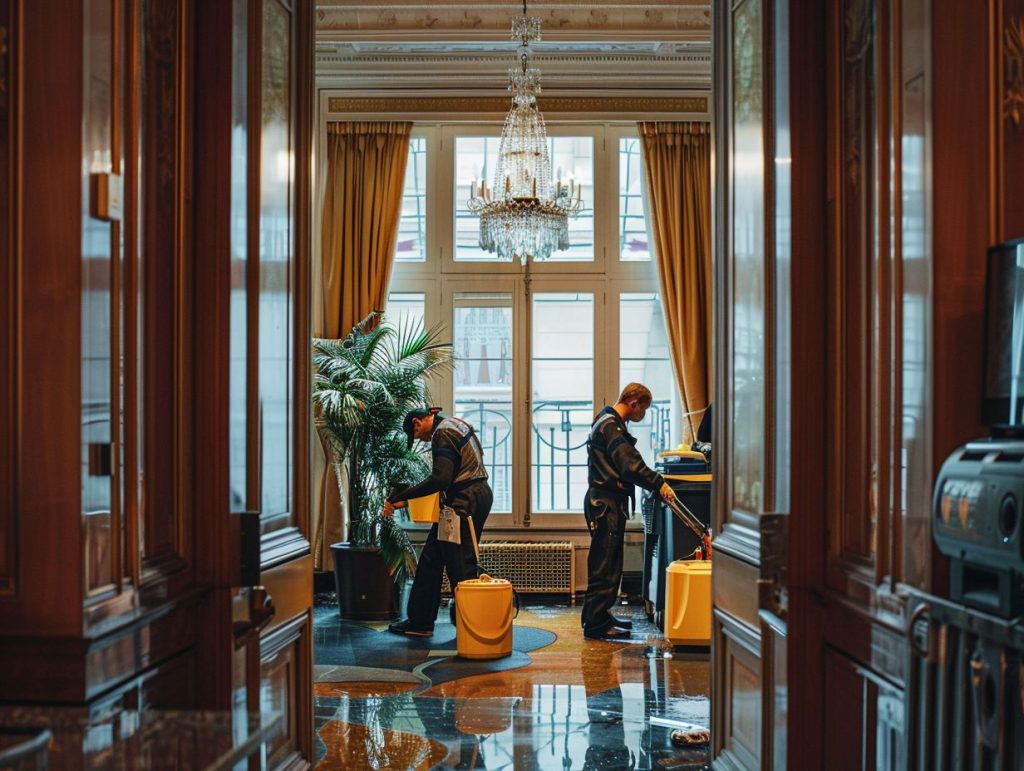

What Happens to the Cleaners When We Change Contractor Mid-Contract? A Plain Answer on TUPE

They stay.

That is the answer nine times out of ten, and it is the part clients find hardest to believe when they have just spent four months running a tender to get away from a service they were unhappy with. The badge on the polo shirt changes. The van outside changes. The woman who has done your second floor at half five every evening for six years does not change, because the law moves her across to whoever wins, on the terms she already has.

Does TUPE apply when you change your cleaning contractor?

Nearly always, in office cleaning. The Transfer of Undertakings (Protection of Employment) Regulations 2006 cover two situations, and the one that catches you is the service provision change – where activities stop being carried out by one contractor and start being carried out by another on the same client’s behalf. A change of contractor, outsourcing for the first time, or bringing the work back in-house can all trigger it.

In-house does not get you out of it either. I have had this conversation twice this year, once with a serviced office operator in Clerkenwell who was convinced that hiring directly meant starting fresh. It means the same transfer, with you as the new employer and no contractor to absorb the liability.

The one condition clients trip over

There has to be an organised grouping of employees whose principal purpose is doing the work for you. A dedicated evening team of nine at a Canary Wharf floor is textbook. The awkward cases are the small ones – a single cleaner covering four unrelated buildings for two hours each, dispatched from a pool. If nobody has organised that person around your site specifically, the argument gets thin, and it is worth taking advice rather than assuming.

The activities also have to remain fundamentally the same after the change. Clients occasionally try to engineer their way out of this by rewriting the specification so heavily that the new service looks like a different animal. It rarely works, tribunals see through thin versions of it, and you have just designed your cleaning provision around an employment law argument rather than around whether the building gets clean.

What transfers with them, and what does that cost you?

Everything. Continuous service, contractual terms, holiday entitlement, notice periods, outstanding grievances, unpaid wage claims, the lot. The incoming contractor also inherits liabilities the outgoing one created – an unresolved disciplinary, a pending tribunal claim, three years of underpaid holiday pay. Same people, different badge.

This is where tender prices stop making sense to people. Two contractors quote for the same Holborn building. One comes in eight per cent higher and the buyer assumes greed. The higher price usually reflects someone who has read the employee liability information properly and priced the payroll they are taking on.

Why the incoming price rises when the payroll is old

Long-serving cleaning staff in London carry expensive terms. Somebody who transferred in from a 2011 contract might hold thirty days’ holiday, an enhanced sick pay scheme that was competitive at the time and is unheard of now, and a shift premium for Sunday work that no current contractor offers on new hires. All of it moves. None of it can be quietly harmonised away six weeks later.

Add the pay floor. A Bromley industrial estate and a Paddington headquarters building can run identical specifications and hours with a thirty per cent gap in the wage bill, because one is paying the statutory minimum and the other has committed to the London Living Wage. If your outgoing contractor was accredited and the transferring team is on that rate, the rate transfers with them. You cannot use a change of contractor as a route back down to the legal minimum.

Pensions are the one carve-out worth knowing about. Rights under an occupational pension scheme relating to old age and survivors’ benefits do not transfer in the ordinary way, though the incoming employer picks up auto-enrolment duties and, in most outsourced cleaning contracts, a defined contribution arrangement that looks near enough identical from the employee’s side. It is a technical exception that almost never produces a saving.

I would rather clients heard this before the tender than after. The number of London office managers who have run a competitive process expecting a fifteen per cent saving, then found the only genuine variable was margin and management overhead, is high enough that I now raise it in the first meeting.

Who has to tell the cleaners, and when?

The outgoing contractor. Not you, and not the incoming one, though in practice all three end up in the room.

Both employers have a duty to inform and consult with appropriate representatives about the fact of the transfer, when it will happen, and any measures they envisage taking in connection with it. Measures means changes – new uniform, new reporting line, a different start time, a switch from weekly to monthly pay. That last one comes up constantly and clients underestimate it. A weekly wage and a monthly one are two different household budgets, and if it is announced by email on a Thursday you will lose people who had every intention of staying.

The 28-day file nobody wants to hand over

Employee liability information has to reach the incoming employer at least twenty-eight days before the transfer: names, ages, particulars of employment, disciplinary and grievance history over the past two years, live and potential legal claims, applicable collective agreements. It is a legal obligation with a compensatory award attached for failure.

It also arrives late more often than not. Outgoing contractors who have just lost a contract they held for eleven years are not enthusiastic about paperwork, and the person who compiled it has often already been reassigned. My standing advice to clients is to make the deadline a condition in the outgoing contract’s exit provisions, with the final invoice held against it. Contractors respond to money in a way they do not respond to regulations.

Even when it arrives on time, treat it as a starting document. I have seen a schedule for a King’s Cross building list six cleaners where eleven turned up on day one, the difference being agency workers who had been on site so long that everyone had forgotten they were agency.

Can the new contractor change the team or their terms?

Barely, and this is the part that undermines the whole exercise for most clients.

Dismissing somebody because of the transfer is automatically unfair. The only route through is an economic, technical or organisational reason entailing changes in the workforce – a real reduction in headcount because the building has shed two floors, say, or a genuine reorganisation of roles. You cannot claim one because you would rather have your own supervisor than the one who came across. Neither is a client saying they never liked the man on the ground floor.

Terms are similarly locked. Variations connected with the transfer are void unless there is an ETO reason, which means the new contractor is running your building with staff on four different sets of terms and no straightforward way to level them.

Cutting hours is a variation of contract

The most common accident I see. A new specification reduces the evening clean from three hours to two and a half across a Canada Water floorplate, the client signs it off as an operational change, and nobody registers that they have just cut ten per cent from six people’s wages. That is a contractual variation connected to the transfer and it is void. The cleaner can work the reduced hours and claim the shortfall.

There is a related trap in start times. A landlord in Ealing decided the cleaning should move from six in the evening to five in the morning so the building looked presentable at eight. Operationally sensible. For a team of six women who had built childcare around evening work, it was a fundamental change to working conditions, and two of them resigned and claimed. The transfer had happened three weeks earlier.

Reductions do happen legitimately. They need consultation, agreement, and usually a genuine ETO reason behind them, and they need to happen properly rather than as a line on a schedule of works.

So when should you leave the contract alone?

More often than the industry likes to admit, and I say that as somebody who bids for this work.

Here is the test. Write down what is wrong with your current service. If the list is dust on high-level surfaces, washroom consumables running out on Fridays, and nobody answering emails, you have a supervision and specification problem. A new contractor moves the same nine people onto a different payroll and hands you a new account manager. Same people, different badge. The dust is still on the pipework above the meeting room in Wembley Park because nobody has ever specified who cleans above two metres or how often.

Fix the specification, escalate to the contractor’s operations director in writing, give it a quarter. If it does not move, then tender, and tender on management quality rather than price, because the wage bill is largely fixed by law before anyone opens a bid.

What the 2026 review might change

The Government launched a call for evidence on TUPE in April 2026, closing on 1 July, as part of its wider commitment to strengthen employee protections. It asked, among other things, whether the ETO restriction on varying terms strikes the right balance and whether the cost of transfers is too high for businesses. No timetable for changes has been set out.

My reading is that harmonisation will get easier for incoming employers before it gets harder, though anyone planning a 2027 tender around that assumption is gambling with somebody else’s contract.

Nothing in the regulations stops you knowing the names of the people who clean your building. Same people, different badge, and most of them have been there longer than you have.

Builder’s Clean, Sparkle Clean, Snagging Clean: Who Pays for Which One in a Cat B Fit-Out?

A project manager rang me from a half-finished floor off Bishopsgate wanting to know why her sparkle clean had come in at eleven thousand when the builder’s clean was four. She had assumed the second one would be cheaper, on the grounds that by then most of the mess would already be gone. It is the other way round, and the confusion behind that assumption costs London tenants more money each year than any other line I see argued over in a fit-out account.

What separates a builder’s clean from a sparkle clean?

The builder’s clean happens while the site is still a site. Hard hats on, first fix still going in, somebody drilling into a soffit above your head. The job is bulk removal – plasterboard offcuts, screed dust, silicone smears, protective film, the grey film that settles on everything within four hours of a wall being sanded. You are working around trades who will make more mess tomorrow, so nobody expects the result to survive the night.

The sparkle clean is a finishing trade. It comes after the last painter has left and before the client walks the floor, and it is measured against a completely different standard: the one where a facilities manager runs a finger along the underside of a desk rail in a meeting room off Charlotte Street and finds nothing.

Somebody is paying for it. The two jobs use different labour, different consumables, and in the second case a much higher tolerance for being made to come back.

Why the first clean is a waste-handling job, not a cleaning one

Half the cost of a builder’s clean in central London is disposal. Construction waste carries duty-of-care obligations and waste transfer documentation that ordinary office cleaning does not, and if your cleaning contractor is not a registered waste carrier the skip movements have to sit with the principal contractor anyway. Then there is the dust itself. Silica from cut screed and blockwork wants M-class extraction, not a Henry with a bag in it, and any contractor pricing a first clean on a Cat B without that kit is either cutting corners or has never worked one.

Who is contractually on the hook for the sparkle clean?

In almost every Cat B I have worked across Greater London – Stratford, Victoria, Ruskin Square down in Croydon – both the builder’s clean and the sparkle clean sit inside the main contractor’s preliminaries. They are priced into the tender sum before the tenant sees a schedule, which is precisely why tenants think they are getting them free. Somebody is paying for it, and that somebody is the tenant, at whatever margin the contractor has stacked on top.

This arrangement produces the single worst outcome in the trade. The main contractor holds the cleaning budget, the cleaning is the last thing to happen before a date with a liquidated damages clause attached, and by week thirty the programme has slipped eleven days. So the sparkle clean gets let to whoever answers the phone on Thursday for a number that would not cover the labour, never mind the machines.

I will say the unpopular thing: landlords should be naming the cleaning contractor in the licence to alter, the same way they name the M&E commissioning engineer. Fit-out glass gets destroyed in this country because a cheap crew turns up with steel scrapers and takes them to coated and toughened panes. Fabrication debris fused into the surface of toughened glass drags under a blade and leaves fine parallel scoring that no amount of polishing lifts. Replacement of a single large pane in a Bankside curtain wall will cost more than the entire clean did.

What “practical completion” does to your invoice

Practical completion is the hinge. Before it, cleaning is the contractor’s problem and comes out of the contract sum. After it, the building is yours, the insurance is yours, and every subsequent operative who walks through the door to fix something is bringing dust into a space you now own. Tenants sign the PC certificate on the strength of a floor that looks immaculate at four in the afternoon and then discover the meaning of that signature about ten days later.

Why does nobody budget for the snagging clean?

Because it is not a stage. It is the consequence of a stage, and consequences do not appear on Gantt charts.

Here is the shape of it. Practical completion happens. The snagging list runs to a hundred and forty items – a door leaf binding, six wonky sockets, an acoustic seal that whistles, three ceiling tiles that were cut short. Over the next four to six weeks, joiners and sparks and a plasterer come back in ones and twos to work through the list. Every one of them cuts, sands, drills or fills something. A single plasterer patching four bulkhead reveals in a Hammersmith office will put more fine dust into the air handling system in an afternoon than the whole of second fix did, because during second fix nobody had commissioned the AHUs yet.

That is the part that catches people. The mechanical systems were running by handover. So the dust from remedial works gets pulled into return air, distributed through the plenum, and dropped evenly over desks that already had monitors and keyboards on them. I have been called into an Old Street floor eight weeks after occupation where the client was convinced there was a fault with the ventilation. There was no fault. Somebody had spent two days chasing cable into a wall in the comms room with the doors wedged open.

The contract does not help you here. Under the rectification period the contractor is obliged to put right the defect. Nothing in a standard JCT form obliges him to clean up the aftermath of putting it right to the standard of a sparkle clean, and every contractor I know reads it that way. So the invoice lands on the occupier. Somebody is paying for it, and by then the fit-out account is closed, the project manager has moved to another job, and the cost falls into facilities revenue where nobody forecast it.

The dust that arrives three weeks after you move in

There is a second source that has nothing to do with snagging and everything to do with how Cat B floors are built. Raised access floor voids in London offices collect an astonishing volume of construction debris – offcuts, screws, cable ties, drill swarf, sandwich wrappers – and nobody cleans them because nobody lifts the panels once the carpet tiles are down. Then a data cabling change six weeks post-occupation lifts forty tiles across an open-plan area and every bit of that comes up with them.

If you are taking a floor with a deep void and any expectation of future cabling churn, void cleaning before the finishes go down is the cheapest money in the whole project. It costs a fraction of what it costs afterwards, when the work has to happen out of hours around furniture.

What should a tenant refuse to pay for?

A second sparkle clean, if the reason you need one is that the first was signed off too early.

This is where I talk people out of buying from me. If your snagging list is short – twenty items, no wet trades, no cutting – do not commission a formal post-snag clean at all. Get your day cleaners to spend two hours on a Friday with a microfibre and a decent vacuum, and spend the money on something else. A full clean on a 12,000 sq ft floor for the sake of some screwdriver dust round nine socket faceplates is a waste of your budget and I will say so on the phone.

The genuine test is whether wet trades or power tools came back. Plaster, paint, MDF cutting, core drilling, floor grinding – any of those and you need a proper clean with extraction, because that dust is abrasive and it will be walked into new vinyl and ground in permanently within a fortnight.

Retention, not a second contract

The better tool is the one you already hold. Retention on a Cat B typically runs at three per cent, released half at practical completion and half at the end of the rectification period. Make post-remedial cleaning an explicit condition of the second release, written into the contract before signature, and price it into the contractor’s obligations rather than buying it separately six weeks later at your own cost. Most contractors will accept the clause at tender stage. Almost none will volunteer it.

How should the three cleans be priced across a London Cat B?

By condition, not by floor area, whatever the per-square-foot rates in circulation suggest. A stripped-back warehouse conversion in Wapping with exposed services, sprayed soffits and polished concrete takes roughly twice the sparkle-clean hours of an equivalent area at Chiswick Park with grid ceilings and carpet tiles, because everything is up high and nothing hides. Glazed partitioning is the other multiplier – a floor with forty glazed meeting rooms is a glass job with some floors attached, and it should be priced by someone who has looked at the partition drawings rather than the net internal area.

Why the glass drawings matter more than the floor plan

Ask for the partition schedule before anyone quotes. Count the glazed doors and the acoustic sets, then work out how much of that glass sits over a stairwell where you need pole work rather than a squeegee off a hop-up. A West End floor I priced in Fitzrovia last spring had 310 linear metres of glazed partitioning across 9,000 sq ft, and the glass alone accounted for just under half the sparkle-clean labour. An equivalent area at Ruskin Square, mostly solid partitions, came in a third under. Net internal area told me nothing useful about either.

Get all three quoted as one package, from one contractor, at tender. The builder’s clean and the sparkle clean go into the contract sum where they belong. The snagging clean gets a provisional sum against it, with the trigger written down: wet trades or powered cutting after PC means it fires, and the money comes out of retention.

Nobody wants to have that conversation in week one. It is a lot cheaper than having it in week thirty-eight, on the phone, standing in a floor full of grey dust with a lease that started on Monday.

Mobilisation Planning for Large London Office Cleaning Contracts: What the First 30 Days Should Look Like

There is a particular kind of controlled chaos that descends on a large London office building on the first Monday of a new cleaning contract. The outgoing contractor’s equipment is still in the loading bay. The new team’s access passes were supposed to be ready by 6am and three of them are not. Someone has misplaced the COSHH folder. A supervisor who was confirmed on Friday has sent a message at 5:45am that turns out to be a resignation. And somewhere on the fourteenth floor, a client facilities manager is already composing a very measured but extremely pointed email about the state of the executive bathroom. Mobilisation – the process of getting a new cleaning contract from signed agreement to fully operational delivery – is the phase that separates cleaning contractors who can win work from those who can actually deliver it. In London’s demanding, high-scrutiny office market, the first thirty days are not a warm-up act. They are the audition, the opening night, and the first review simultaneously.


Why Mobilisation Makes or Breaks a Contract

Ask any experienced facilities manager in London and they will tell you the same thing: most cleaning contracts that fail, fail in the first thirty days. Not because the contractor cannot clean, but because the operational infrastructure was not ready, the communication was not right, or the TUPE process was not handled properly – and by the time those problems became visible, the client relationship had already taken damage that proved very difficult to repair.

The first month of a new contract is when the client forms their assessment of the incoming contractor. It is when building occupiers decide whether this is an improvement on what came before or simply more of the same in a different uniform. It is when the facilities management team learns whether the contractor they selected on the strength of a compelling tender document is actually capable of delivering what was promised. The stakes are high, the scrutiny is intense, and – crucially – the time to get everything right is finite. Mobilisation planning is not a bureaucratic formality. It is the most operationally significant thing a cleaning contractor does.


Before Day One: The Groundwork That Cannot Be Skipped

TUPE: The Legal and Human Foundation

For any sizeable London cleaning contract that involves taking over a service from an existing provider, TUPE – the Transfer of Undertakings (Protection of Employment) Regulations 2006 – is not a box to be ticked. It is the legal and human framework that governs the transfer of the existing cleaning workforce to the incoming contractor, and mishandling it is one of the most reliable ways to begin a contract badly before it has even started.

Under TUPE, employees whose work is substantially connected to the contract being transferred have the right to transfer to the new employer on their existing terms and conditions. This means the incoming contractor needs to know, well in advance, who those employees are, what their contractual entitlements look like, and whether any are at risk. The consultation process must be completed properly, within the required timescales, and communicated to affected employees clearly and respectfully. A TUPE process that leaves staff feeling uncertain, undervalued, or poorly informed going into the transition will produce exactly the operational instability that everyone is trying to avoid. These are people. Getting TUPE right is not just good compliance – it is good management.

Site Survey, Specification, and Getting the Systems Ready

The cleaning specification for a large London office building should not still be under negotiation when the first operative walks through the door. The full scope – every area, every surface, every frequency, every product – needs to be agreed, documented, and distributed to the operational team before mobilisation begins. It sounds obvious. It is remarkable how often it does not happen.

Alongside the specification, the pre-mobilisation phase should cover: DBS and right-to-work checks for all staff, particularly for buildings with enhanced security requirements; equipment procurement and confirmed delivery dates; COSHH assessments and method statements prepared and signed off; cleaning station locations identified and confirmed with the building; and the KPI and reporting framework agreed with the client. The incoming contractor should also establish contact with the outgoing one – sometimes a tense conversation, but a necessary one – to understand the building’s quirks, history, and the operational realities that never make it into the tender document.


Days 1 to 7: Getting the Foundations Right

The First Night – and Why It Matters More Than Any Other

The first overnight clean of a new large office contract is the moment when planning meets reality, and the gap between the two becomes immediately apparent. Which floor does the cleaning station on Level 8 actually serve? How long does the freight lift take? Where is the grey water disposal point nobody mentioned in the site survey? These are the questions that get answered on night one, ideally by an experienced supervisor who is present throughout and solving problems as they arise rather than logging them for a debrief on Thursday.

The first clean will not be perfect. Experienced clients know this. What they are watching for is whether the contractor is present, attentive, and visibly trying to get things right – or whether the first night feels like an afterthought. The supervisor on duty for mobilisation week is not interchangeable with a standard site supervisor. They need to be senior enough to make decisions, experienced enough to read a building quickly, and calm enough to handle the things that will inevitably not go to plan.

Access, Equipment, and the Things That Go Missing

If there is a universal law of cleaning mobilisation it is this: something essential will not arrive or will not work on day one, and the team that recovers fastest is the team that planned for it. Access passes are the single most common mobilisation failure on large London corporate contracts – a consequence of building management systems, security protocols, and contractor administration all needing to align simultaneously, which they do imperfectly. Having a named point of contact in the building’s security or reception team, confirmed before day one, is the mitigation that experienced mobilisation managers build in as standard.

Equipment should be on-site and tested before the first clean, not delivered the morning of. Cleaning stations should be stocked, labelled, and assigned. Every operative should have a written task sheet for their area on day one – not a verbal briefing in a loading bay at 5:50am.


Days 8 to 21: Calibrating and Building the Relationship

Listening to What the Building Is Telling You

The second and third weeks of mobilisation are when the feedback loop becomes the most important operational tool. Every complaint, every comment, every raised eyebrow from a client or building occupier is information about where the specification, the schedule, or the staffing needs adjustment. The contractors who handle this phase well have a formal mechanism for capturing and acting on that feedback – a daily log reviewed by the account manager, a weekly call with the client, and a clear process for translating comments into operational changes within 24 to 48 hours.

The building itself will also tell you things no survey could. The floor that generates twice the foot traffic the plan anticipated. The meeting suite that runs back-to-back from 7am and needs an early-morning reset that was not in the original scope. The client director’s PA who is, it turns out, the person whose opinion of the cleaning standard carries the most weight in the building. Week two is when experienced mobilisation teams learn to read the building rather than just clean it.

Building the Client Relationship From the Ground Up

Mobilisation is not just an operational process. It is a relationship-building exercise with a hard deadline. The facilities management team overseeing the contract will be watching how issues are communicated – whether problems are flagged proactively or disclosed only when asked, whether the account manager is accessible or invisible, whether the contractor treats the client as a partner or an audience for performance. The behaviours established in weeks two and three tend to define the tone of the relationship for the life of the contract. This is the phase in which trust, if it is going to be built, begins to be built.


Days 22 to 30: The First Audit and What It Should Reveal

The end of the first month should not arrive without a formal performance review. A structured audit – covering every area of the specification, scored against the agreed KPI framework, and conducted jointly by the contractor’s account management team and the client’s facilities representative – gives both parties an honest picture of where performance stands and what needs to change.

A good first-month audit will surface some things that are not quite right. That is expected and normal. What it should also reveal is a contractor that knows its building, has a functioning feedback loop, has addressed the early issues that emerged in weeks one and two, and is delivering a consistent standard across all areas rather than a variable one that reflects which supervisor happened to be on. The audit is not the end of mobilisation. It is the point at which mobilisation transitions into contract management – and the standard set here becomes the benchmark for everything that follows.


The First 30 Days Are the Contract

Everything that matters about a cleaning contract – the client relationship, the operational reputation, the team’s confidence in the building, the building’s confidence in the team – is established in the first thirty days. The specification can be adjusted, the schedules refined, and the KPIs can evolve over time. But the impression formed in month one is extraordinarily persistent. Clients who see a contractor mobilise well tend to stay loyal and give the benefit of the doubt when things go wrong. Clients who see a contractor mobilise badly tend to start thinking about the next tender before the contract has reached its six-month review. In London’s competitive cleaning market, where contracts are won and lost on service reputation as much as on price, mobilisation planning is not the beginning of the delivery process. It is the delivery process, in miniature – and it sets the tempo for everything that follows.

Cleaning London Co-Working Spaces: The Hygiene Challenges of High Turnover

A Monday morning at a central London co-working space is not so much an office environment as it is a controlled theatrical event. The freelance copywriter setting up at the standing desk. The three-person fintech startup colonising the corner booth with a tangle of MacBook chargers. The management consultant who has booked the glass-walled meeting room until noon and is already on his second flat white. The cereal bar is being systematically depleted. The coffee machine has a queue. The shared printer is already jammed. And behind all of this – unseen, underappreciated, and facing a cleaning challenge that a standard commercial cleaning contract was absolutely not designed for – is the team responsible for keeping the whole operation looking like the aspirational, productive, well-appointed workspace that the marketing photos promised it would be. No pressure.


Not Just a Busier Office – A Different Animal Entirely

The instinct when approaching co-working cleaning is to treat it as a conventional office problem with the volume turned up. More people, more mess, more frequent attention – scale the standard model and you are fine. This instinct is wrong, and it is responsible for a significant number of unhappy co-working operators across Greater London.

Co-working spaces are not simply busier versions of conventional workplaces. They are structurally different environments that generate different hygiene challenges, require different protocols, and demand a cleaning operation that can respond dynamically to conditions that change by the hour. The fundamental difference is accountability. In a conventional leased office, a single organisation owns the cleanliness of its space – they set the standards, brief the staff, and carry the reputational consequences of a poorly maintained environment. In a co-working space, dozens of different companies and hundreds of individuals use the same surfaces, share the same amenities, and carry none of the consequences individually. The result is a commons problem as old as economics: when everyone is nominally responsible, no one actually is. Except, inevitably, the cleaning contractor – who becomes, by default, the only party in the building who genuinely cares whether the kitchen is in a presentable state at 2pm on a Wednesday.


The Surfaces That Take the Most Punishment

Shared Kitchens and Coffee Stations: The Wild West of Office Hygiene

If there is a single point in any co-working space where hygiene standards face their most sustained test, it is the communal kitchen. This is where the social contract goes to quietly unravel. The shared fridge accumulates items that defy description and resist categorisation. The coffee machine is operated by people with a wide range of interpretations of the phrase “please wipe after use.” The microwave, if left to its own devices for more than 24 hours in a busy Clerkenwell co-working space, can achieve a state that food safety inspectors would take a photograph of, professionally.

Co-working kitchen cleaning cannot operate on a once-a-day schedule. High-traffic communal kitchens need attention multiple times throughout the working day – mid-morning, post-lunch, mid-afternoon at minimum – alongside a thorough overnight clean covering appliance interiors, behind-machine surfaces, and the areas that daytime checks never quite reach. Shared fridges need a documented weekly clear-out protocol, with a posted policy that is genuinely enforced rather than hopefully displayed. A beautiful artisan kitchen installation, which many of London’s premium co-working operators have invested in substantially, does not look beautiful for long without a cleaning programme built around its actual usage patterns.

Meeting Rooms by the Hour: Six Companies, One Table, No Mercy

A meeting room in a co-working space is not cleaned between bookings. It probably should be – or at least quickly reset – but the pace of back-to-back hourly sessions makes a full inter-booking clean impractical without dedicated daytime resource. What this means in practice is that by the time the fifth company of the day arrives for their 3pm client presentation, they are inheriting the whiteboard notes, the coffee cup rings, and the ambient atmosphere of everyone who went before them. Which is, at minimum, not ideal.

The practical answer is a layered approach: a rapid reset protocol – clear, wipe, restock – executable in the gap between bookings where one exists, combined with a thorough end-of-day deep clean addressing the accumulated wear of a full rotation. The whiteboard is worth calling out specifically. In most co-working meeting rooms, the whiteboard is the highest-use surface in the space and the one that receives the least cleaning attention. A marker-ghosted whiteboard covered in someone else’s strategic brainstorm communicates one thing very clearly to the next occupants: nobody here is really paying attention. Operators cannot afford that message.


Variable Occupancy and the Fixed Schedule Problem

One of the most reliable structural failures in co-working cleaning contracts is the mismatch between fixed schedules and radically variable occupancy. A London co-working space on a packed Tuesday in October looks nothing like the same space on a Friday afternoon in August – and frankly, Friday afternoon in August looks nothing like Friday afternoon in September, when half of London’s freelance population returns from holiday simultaneously with the apparent collective decision to finally get that rebrand project sorted. Occupancy can swing by 40 to 50 per cent between peak and quiet periods, and a cleaning schedule calibrated for average demand will be visibly inadequate on peak days while representing significant wasted resource on light ones.

The Monday Morning Surge

Monday morning in a central London co-working space deserves its own operational planning category, because it is genuinely unlike any other moment in the weekly cycle. The space has been quiet since Friday afternoon. The weekend clean has left things in reasonable order. And then, between 8am and 9:30am, the entire week’s ambitions arrive simultaneously: spillages, rearranged furniture, charger cable ecosystems sprouting from every available surface, and an assault on the coffee machine that would challenge industrial catering equipment. By 10am, multiple high-traffic areas will already need attention before the official morning cleaning round has been completed.

A cleaning operation that treats Monday morning as equivalent to Wednesday morning is not serving the space adequately. Deploying even a single additional operative specifically for the Monday arrival surge is an investment that pays dividends in the ambient standard of the space for the rest of the week – and it is the kind of operational intelligence that distinguishes contractors who understand co-working from those who are applying a standard office model and wondering why it keeps falling short.


Focus Pods, Phone Booths, and the Enclosed-Space Problem

Contemporary co-working design has given the world the padded phone booth, the acoustic pod, and the semi-enclosed focus station – and with them, a hygiene challenge that most cleaning specifications have not caught up with. These are small, sealed or semi-sealed spaces with soft-touch interior surfaces, minimal natural ventilation, and an extremely high rate of individual use throughout the day. Each is, in terms of hygiene load relative to size, one of the most demanding surfaces in the building. Think of them as the cockpit of a very small aircraft that dozens of different pilots use every day – intimate, enclosed, and absolutely nobody’s official responsibility to wipe down between sessions.

The fabric or foam-upholstered interiors of a phone booth cannot be wiped down with a standard hard-surface disinfectant without damaging the finish. They require upholstery-safe cleaning products applied on a regular scheduled cycle, alongside ventilation management to address the air quality issues that build up in a small enclosed space used continuously by different people. In practice, these spaces are missing from the majority of co-working cleaning specifications entirely. They should be named, scheduled elements of the programme – treated with the same seriousness as kitchen surfaces and meeting room tables, not as afterthoughts addressed only when a member files a complaint.


Consumables, Restocking, and the Perpetual Empty Soap Dispenser

There is a particular kind of demoralisation associated with reaching for the soap dispenser in a shared bathroom and getting nothing. Or finding the paper towel holder empty since midday. Or watching the hand sanitiser station by the entrance perform its dispenser equivalent of a shrug. In a conventional office, consumables management is a routine part of facilities operations. In a co-working space, where usage volume is high and arrival patterns are genuinely unpredictable, it demands active monitoring and a restocking protocol that responds to actual demand rather than running to a fixed weekly schedule.

A co-working cleaning contract should include explicit consumables management responsibilities: minimum stock levels for every amenity point, checks built into daytime cleaning rounds, and a clear escalation route for unexpected depletion events. A co-working space that has run out of soap in the third-floor bathroom by Tuesday lunchtime has a member experience problem that no amount of exposed brick, standing desks, and craft coffee can paper over. The physical environment is the product. When the basics fail, the brand fails with them.


In Co-Working, Cleanliness Is the Product

The operators of London’s co-working and serviced office spaces are selling an environment. Not just a desk or a broadband connection – an experience of a genuinely well-maintained, professionally managed, pleasant place to work. That experience is what justifies the monthly membership, retains members against the inevitable competitor offers, and generates the word-of-mouth recommendations that fill a new site in its first year. In a market as competitive and as design-conscious as London’s co-working sector, the physical quality of the space is the primary differentiator – and cleaning is what maintains it.

Cleanliness is not simply a background condition of that product. It is the product. A co-working space where the kitchen is perpetually questionable, the meeting rooms carry evidence of their previous occupants, and the phone booths have developed an atmosphere you would rather not examine too closely, is a co-working space with a member retention problem in the making. Getting the cleaning right here is not a line in the cost structure to be minimised. It is a core component of the offer – and the operators who treat it as such are the ones whose members renew.

Hammersmith Office Cleaning: Why the W6 Corridor Is One of London’s Most Competitive FM Markets

Get off the Piccadilly line at Hammersmith on a Tuesday morning and the first thing that hits you is the sheer purposefulness of it all. Thousands of people streaming out of four tube lines, past the coffee shops, under the flyover, and into what is, by any measure, one of the most densely packed corporate office corridors in West London. The Ark building looms over the junction like a spaceship that decided the Great West Road was good enough. The glazed towers along Beadon Road and Hammersmith Broadway gleam in the morning light. And somewhere in all of this, a facilities manager is checking their phone, wondering whether the cleaning contractor showed up at 6am, whether the client boardroom on the fourteenth floor was properly turned around after last night’s late finish, and why – for the third time this month – the wrong operative has been sent to a building they have never set foot in before. Welcome to W6. It is brilliant, it is relentless, and it is completely unforgiving about cleaning standards.


The W6 Corridor: More Than Just a Flyover and a One-Way System

When facilities managers in London talk about the “W6 corridor,” they are referring to the commercial spine that runs roughly from the Chiswick roundabout in the west through Hammersmith Broadway and up towards Shepherd’s Bush and White City in the east. It is not a single street so much as a gravitational zone – a stretch of West London that has been quietly accumulating major corporate occupiers for decades and shows absolutely no signs of stopping. It is, in short, the kind of place where the phrase “we just need someone to keep it clean” will get you a politely incredulous look from anyone who has actually tried to deliver cleaning services here.

The names on the buildings tell you everything you need to know about the calibre of tenants involved. Disney’s UK headquarters sits in Hammersmith. L’Oréal, Reckitt, and a string of media and professional services firms occupy the major office developments around the Broadway and along the Great West Road. The Ark – that extraordinary elliptical building designed by Ralph Erskine, which genuinely looks like it belongs in a science fiction film – houses global businesses that expect facilities management to match their international standards. This is not a corridor where a contractor can show up with a mop and a winning attitude and coast through the contract. The expectations here were set high a long time ago.


A Tenant Mix That Keeps Everyone on Their Toes

Corporate Giants With Corporate Demands

The dominant characteristic of W6’s office market is the concentration of large, brand-conscious corporate occupiers in a relatively compact geography. These are businesses with global headquarters, active ESG reporting requirements, and internal facilities teams who know exactly what best-in-class cleaning looks like because they have seen it in their offices in New York, Amsterdam, and Singapore. When a cleaning contractor wins a Hammersmith contract of any size, they are not just cleaning an office – they are stepping into a set of standards that has been shaped by years of international benchmarking.

That means COSHH documentation in order before day one. It means audit-ready cleaning schedules, not ones that exist on a spreadsheet that no one has updated since the previous contractor left. It means operatives who know the difference between a client reception area and a back-of-house corridor and treat them accordingly. The corporate tenants along the W6 corridor do not distinguish between “the big stuff” and “the details” – because for them, the details are the big stuff.

A Building Stock That Spans Every Era

If the tenant mix is demanding, the building stock is genuinely varied – and variety, in cleaning terms, is a polite word for complexity. Within a few hundred metres of Hammersmith Broadway you will find everything from Victorian conversions and 1970s office blocks with suspended ceilings and original terrazzo floors that have survived three refurbishments and a change of ownership, to late-1990s glass-and-steel towers with polished concrete lobbies, to post-2010 mixed-use developments with feature joinery, exposed services, and the kind of bespoke surface finishes that require a product specification rather than a general-purpose cleaner and a hopeful expression.

Each building type brings its own set of challenges. The older stock often has awkward service access, limited storage for cleaning equipment, and lifts that were not designed with trolleys in mind. The newer towers have high-specification finishes that respond badly to the wrong product – a lesson that more than one contractor in this postcode has learned expensively. Getting to know a Hammersmith building properly takes time and attention, and it shows immediately when that investment has not been made.


Why Hammersmith Is Such a Competitive FM Market

The Four-Line Factor

There is a reason that Hammersmith appears near the top of any list of well-connected London locations, and it is sitting right underneath the Broadway: four Underground lines serving the same station. The Piccadilly, District, Circle, and Hammersmith & City lines converge here, giving the area exceptional transport links in almost every direction. For office tenants, this is a selling point. For cleaning contractors trying to retain trained staff, it is a double-edged gift – wonderful for recruitment, somewhat alarming for retention.

When your operatives can get to Paddington in eight minutes, Earl’s Court in three, and central London in under twenty, the competition for their time and commitment does not come only from other Hammersmith contractors. It comes from everywhere. Staff retention in the W6 cleaning market is materially harder than in less connected postcodes, and the contractors who manage it best are the ones who have invested in the things that make people stay: fair pay, reliable scheduling, decent management, and the sense that their employer actually knows who they are.

Premium Expectations, Competitive Pricing – and the Gap Between Them

The W6 corridor is also notable for the tension that sits at the heart of most Hammersmith FM conversations: clients with premium expectations and procurement processes that are, shall we say, enthusiastically competitive on price. Large corporate occupiers typically run structured tender processes, and the field of contractors bidding for Hammersmith contracts is not small. The result is a market where the pressure to price keenly is constant, even as the expectations on delivery remain very high indeed. It is, if you want a sporting analogy, like being asked to compete in the Premier League on a Championship budget – technically possible, but requiring a level of operational intelligence that separates genuinely capable contractors from those who win the tender and quietly panic afterwards.

This creates a sorting effect over time. Contractors who win W6 contracts on price alone and then struggle to deliver at the expected standard tend not to hold them for long. The corporate FM teams in this corridor are experienced, they conduct regular performance reviews, and they are not shy about switching providers. The contractors who establish long-term positions in this market are, almost invariably, the ones who have worked out how to reconcile quality delivery with sustainable pricing – which is a harder problem than it sounds, and a more interesting one.


The Cleaning Specifics That Define W6 Contracts

High Footfall and the Perpetual Morning Reset

One of the operational realities that defines cleaning in Hammersmith’s major office buildings is sheer footfall. A large corporate campus on the Broadway can see hundreds of employees arriving within a forty-five-minute window every morning, and the entrance areas, lift lobbies, and ground-floor amenity spaces take an immediate hit. There is no hiding a substandard overnight clean in a building where the first three hundred people through the door have the coffee-sharpened critical faculties of executives on their way to 9am meetings. The gap between a well-executed morning clean and a poor one is visible to every single person who walks through the door before 9am – which, at a major Hammersmith occupier, might be several hundred people.

This puts a premium on the quality of overnight and early-morning cleaning that is difficult to overstate. Floors that were pristine at midnight need to still look right at 8am, which means the product choices, the buffing schedule, and the specification for entrance matting and hard-floor maintenance all need to be calibrated for the specific volume and pattern of that building’s foot traffic.

Boardrooms, Breakout Spaces, and the Meeting Culture Problem

Hammersmith’s corporate tenants tend to run busy meeting cultures – back-to-back rooms, frequent visitor and client-facing events, and the kind of intensive space usage that means a boardroom can go from pristine to comprehensively used in the space of two hours. Daytime cleaning responsiveness – the ability to turn a room around quickly, restock consumables, and address spills or presentation mess without a lengthy advance notice requirement – is not a premium add-on in this market. It is a baseline expectation. Contractors who staff and schedule for reactive daytime coverage hold a meaningful advantage over those whose model assumes that nothing happens between 6am and 6pm.


If You Can Clean Here, You Can Clean Anywhere

The W6 corridor asks a lot of its cleaning contractors – high standards, demanding clients, a competitive pricing environment, staff retention challenges that the four-line tube station does not help, and a building stock that requires genuine expertise rather than a one-size-fits-all specification. None of that is surprising when you consider the calibre of businesses that have chosen Hammersmith as their London home. What it means for facilities managers evaluating cleaning provision in this part of West London is straightforward enough: the question is not simply whether a contractor can cover the hours and hit the price point, but whether they have the operational depth, the local knowledge, and the service culture to hold up under the scrutiny that Hammersmith’s corporate occupiers will absolutely apply. The contractors who thrive here are not the cheapest or the flashiest. They are the most consistent – and in a market this competitive, consistency is the only currency that actually holds its value.

NDAs, Confidentiality, And Trust – Office Cleaning for Businesses Handling Confidential Papers

It’s 7pm in the City, and whilst you’re heading home after a long day, our cleaning team is arriving with full access to everything. Every room. Every desk. Every whiteboard still covered in this morning’s strategy session. That half-finished presentation left open on someone’s monitor. The contracts in the recycling bin.

Here’s the uncomfortable truth that keeps compliance officers awake at night – your cleaners see absolutely everything. For law firms handling sensitive litigation, financial institutions managing client portfolios, or corporate offices negotiating confidential deals, that’s a genuine security consideration deserving the same scrutiny you’d apply to any third-party contractor with unrestricted premises access.

Yet whilst businesses vet IT contractors within an inch of their lives and subject consultants to lengthy onboarding processes, cleaning contracts are sometimes signed with less consideration than choosing a sandwich. The person with a mop gets less scrutiny than the person fixing your printer. It’s time to talk about NDAs, confidentiality protocols, and why trust in office cleaning isn’t just about removing coffee stains – it’s about protecting information that could make or break your business.

Why Your Office Cleaner Knows More Than You Think

Before we dive into solutions, let’s acknowledge the full scope of access cleaning teams actually have. Unlike most contractors who visit during office hours under watchful eyes, cleaners work after everyone’s gone home. We vacuum around papers left on desks, empty bins full of printed emails (seriously, who still prints emails in 2026?), and wipe down whiteboards covered in confidential client names and figures.

We’ve got keys to every room, including the ones you think are secure. We clean the boardroom where yesterday’s M&A discussions happened and someone forgot to flip the flip chart. We work in offices where sticky notes with passwords are inexplicably still stuck to monitors. We hoover meeting rooms where sensitive client files are left scattered on tables.

And here’s what makes it interesting – cleaning staff often become functionally invisible to office workers. It’s like we’re wearing Harry Potter’s invisibility cloak. People have entire conversations about confidential matters in front of us as though we’re not there, leave documents open, and treat the evening shift as though security protocols suspend after 6pm. It’s not malicious; it’s human nature. But it means professional cleaning contractors need rock-solid confidentiality protocols as an absolute baseline requirement.

The Anatomy of a Robust Cleaning NDA

Beyond the Boilerplate

If your cleaning contractor’s NDA looks like it was downloaded from a generic template site and could apply equally to a dog walker or a website designer, that’s your first red flag.

A comprehensive cleaning NDA should include specific provisions about information security – explicit clauses prohibiting photography or recordings on mobile devices (because “I’ll just take a quick photo” is far too easy), GDPR compliance requirements, and clear definitions of what constitutes confidential information in your specific context.

For law firms, this includes client names, case details, and visible documents. For financial institutions, it encompasses client portfolios, transaction details, and strategic planning materials. The NDA should outline consequences beyond generic legal language – immediate contract termination, liability for damages, and clear reporting procedures.

Crucially, the agreement must extend to all employees, subcontractors, and anyone stepping foot in your office with a mop. There’s no point having your primary cleaning contractor sign an ironclad agreement if they send agency staff who think “secure disposal” means not missing the bin.

Client-Specific Confidentiality Protocols

Cookie-cutter approaches don’t cut it when you’re cleaning offices for solicitors’ firms handling sensitive litigation or merchant banks managing high-net-worth client portfolios. Different industries require different protocols.

Government contractors might require security clearance for cleaning staff. Legal firms often need protocols around never moving papers or files, even if they’re inconveniently placed. Financial institutions might require separate security procedures for trading floors or compliance departments.

The best cleaning contractors don’t just agree to these requirements – they help clients develop them based on industry experience.

Vetting Your Cleaning Team: The Human Element

Background Checks That Actually Mean Something

All the NDAs in the world won’t help if you don’t know who you’re letting into your office. Proper vetting starts with DBS checks – Disclosure and Barring Service background checks revealing criminal records. Different levels matter: basic DBS checks reveal unspent convictions, standard checks show both spent and unspent convictions plus cautions, and enhanced DBS checks include information held by local police that’s reasonably considered relevant.

For cleaning staff in particularly sensitive environments – government buildings, defence contractors, facilities handling classified information – enhanced checks aren’t excessive; they’re essential.

Professional contractors also verify employment history, actually call references rather than filing them away, and ensure staff are legally entitled to work. If you wouldn’t let someone into your home without knowing who they are, why let them into your office handling confidential information?

Ongoing Training and Security Awareness

Getting vetted staff through the door is one thing; keeping them security-conscious is another. Confidentiality training shouldn’t be a dusty PowerPoint shown once during onboarding and never mentioned again. It needs to be ongoing, scenario-based, and embedded in company culture.

Good training covers practical situations: What if you accidentally see confidential information whilst cleaning? (Answer: nothing – don’t read it, don’t photograph it, don’t discuss it.) Found documents in a printer or left on a desk? (Leave them there and report it.) Someone’s left their computer unlocked? (Don’t touch it, report it.)

The best training creates a culture where discretion isn’t just expected – it’s valued. Where cleaning staff understand confidentiality isn’t about the company covering itself legally; it’s about respecting clients and protecting information that could harm real people if mishandled.

Protocols That Protect: Practical Confidentiality Measures

Theory’s all well and good, but let’s talk practical measures that actually keep information secure whilst maintaining clean offices.

Restricted access means identifying high-security areas requiring specialist-vetted staff or supervised access. Certain offices might only be cleaned by specific team members with enhanced vetting, or particularly sensitive areas cleaned during different hours with security personnel present.

“Clean desk” policy support is crucial. Whilst it’s ultimately the client’s responsibility to secure their documents at day’s end, professional cleaners reinforce this by never moving, reading, or touching papers. If something’s in the way of cleaning, we clean around it or skip that area and report it. We’re not tidying your desk – we’re cleaning surfaces that are clear.

Secure waste handling is another critical protocol. Confidential waste bins get treated differently from regular rubbish – separate collection procedures, witnessed disposal, or coordination with specialist confidential waste disposal services. We never rummage through bins or remove anything from confidential waste except to empty them into secure disposal systems.

Documentation matters too. Professional contractors maintain logs of who cleaned which areas and when – serving quality control, security verification, and accountability. When paired with key card access logs and CCTV cooperation, these records create audit trails protecting both client and cleaning staff.

The Trust Factor: How Professional Cleaners Build Client Confidence

Here’s the thing about confidentiality – it’s not just about what’s written in contracts. It’s about trust, and trust is earned through consistent, professional behaviour over time.

Professional London cleaning contractors who specialise in corporate clients build trust through transparency – being upfront about vetting processes, willing to provide references from other clients in sensitive sectors, and open about how we handle confidentiality concerns. We communicate proactively, not just when problems arise.

Long-term relationships speak volumes. When a law firm has used the same cleaning contractor for five years, that’s not just about sparkly floors – it’s about proven reliability and demonstrated trustworthiness. Client testimonials from similar sensitive-sector businesses provide reassurance that confidentiality isn’t just promised; it’s delivered.

Insurance and liability coverage are practical trust indicators too. Professional indemnity insurance, public liability insurance, and specific coverage for confidentiality breaches show that a cleaning contractor takes responsibilities seriously enough to back them financially.

But perhaps the most powerful trust-builder is this: we understand that we’re not just cleaning offices. We’re protecting reputations, safeguarding client relationships, and supporting the confidential work that happens in those spaces. That’s not a responsibility we take lightly.

Conclusion

Confidentiality in office cleaning isn’t about paranoia – it’s about professionalism. When your business handles confidential papers, your cleaning contractor isn’t just a vendor; they’re a security partner who needs to match your standards.

The right cleaning contractor doesn’t just promise confidentiality – they demonstrate it through comprehensive NDAs tailored to your industry, rigorous staff vetting including appropriate DBS checks, ongoing security training, and practical protocols that protect information in real-world scenarios. They understand that trust is earned through consistency, transparency, and proven track records.

When selecting a cleaning contractor for your London office, ask about confidentiality protocols. Request details about staff vetting procedures. Ask for references from similar sensitive-sector clients. Review NDAs and ensure they’re specific, comprehensive, and enforceable. Check insurance coverage.

Because the cleaners working in your office after hours have access to everything. Make sure they’re the kind of people – and the kind of company – that deserves that access. Your clients’ confidentiality, your business reputation, and your professional obligations depend on it.

The True Cost of In-House Cleaning vs. Professional Contractors in London

More Than Just a Mop and Bucket

On the surface, managing your own office cleaners looks like a simple way to keep costs down. You post a job ad, hire someone reliable, and they turn up with a mop and some elbow grease. Easy, right?

Well, not quite.

Many London businesses have discovered the hard way that handling cleaning in-house comes with more strings attached than they expected. From payroll headaches to last-minute sick cover, and from insurance compliance to quality control, the real cost of DIY cleaning adds up faster than most realise.

So, what are you actually paying for when you go it alone? And how does that compare with what a professional cleaning contractor offers?

Let’s break it all down.


What’s Included in In-House Cleaning Costs?

Hiring a cleaner directly means taking on the full responsibility of an employer. That means dealing with payroll, holiday entitlement, performance management, health & safety protocols—and the occasional staffing crisis. Here’s what really goes into it.

1. Wages

If you’re based in London, you’ll want to pay the London Living Wage, which sits at £13.15 per hour in 2025. Two cleaners working three hours a day, five days a week, quickly adds up.

2. Employer Contributions

You’ll need to factor in National Insurance Contributions, auto-enrolment pensions, and any employer-paid benefits you offer. Typically, this adds around 28% to the base salary.

3. Holiday Pay & Sick Leave

Statutory entitlement means cleaners get 28 days’ paid leave (pro rata). And when they’re off sick? You still have to pay, or at least find cover.

4. Recruitment Costs

High staff turnover is common in cleaning roles. Hiring, vetting, and onboarding new staff takes time, not to mention advertising costs.

5. Equipment & Supplies

You’ll need to purchase and store everything—mops, hoovers, cloths, eco-friendly products, PPE, and waste bags. Add in PAT testing for electricals and COSHH compliance for chemicals.

6. Training and Supervision

Even the most self-sufficient cleaner needs occasional support. You or your facilities team will be on the hook for training, managing rotas, quality control, and performance reviews.


The Hidden Risks and Responsibilities of Going In-House

Beyond the obvious costs, there’s a hidden layer of admin that most employers underestimate. When you employ cleaners directly, you’re also responsible for:

  • Conducting risk assessments and ensuring full health & safety compliance
  • Maintaining up-to-date COSHH records for any chemicals used
  • Ensuring insurance coverage for employer liability, public liability, and accidental damage
  • Running DBS checks if cleaners have access to secure or sensitive areas
  • Covering shifts at short notice if a cleaner calls in sick or leaves suddenly

Unless your business has a dedicated facilities management team, handling all this becomes a serious distraction from your core operations.


What Do You Actually Get with a Professional Contractor?

This is where a professional office cleaning company really shines. A reputable contractor removes the operational burden from your plate and delivers a fully managed service with built-in accountability.

Here’s what a standard commercial contract should include:

  • Trained, vetted cleaning staff with full DBS checks if required
  • Professional equipment and high-quality cleaning products
  • Full compliance with employment law, insurance, and health & safety
  • Planned cover for sickness or holidays—no disruptions to your schedule
  • Regular supervisor inspections and cleaning audits
  • Clear communication and a dedicated account manager
  • Flexibility to adjust the service (e.g. add deep cleans, respond to outbreaks)
  • Transparent pricing—you pay a single monthly invoice

This all-in approach means you no longer have to think about procurement, supervision, or complaints. If standards drop or needs change, your contractor is contractually obligated to sort it out.


Cost Comparison: In-House vs. Contracted Cleaning in London

To give you a sense of how this plays out in pounds and pence, here’s a typical example for a medium-sized London office (approx. 5,000 sq ft), needing two cleaners working three hours per weekday.

Cost CategoryIn-House Cleaning (Est.)Professional Contractor
Wages (LLW £13.15/hr x 30 hrs/week)£1,710/monthIncluded
Employer’s NI£388/monthIncluded
Holiday Pay£184/monthIncluded
Supplies and equipment£100–£150/monthIncluded
HR, training, admin (time cost)Variable (£200 est.)Included
Insurance, compliance, audits£100–£150/monthIncluded
Total Monthly Cost£2,760–£2,900£1,200–£1,500

The contracted route offers predictability and efficiency, often at half the cost. And that’s before factoring in the admin time and risk management headaches you avoid.


Quality, Accountability and Flexibility – Why It Matters

Beyond pounds and pence, the real value of outsourced cleaning is in quality control and adaptability.

With an in-house cleaner, there’s little room for feedback beyond an awkward chat. If something’s missed or not up to standard, it’s on you to address it. Contractors, on the other hand, build quality assurance into their systems. If standards slip, the company responds—and replaces staff if needed.

You also gain scalability. Need extra cleaning ahead of a board meeting? Want to introduce sanitising protocols during cold season? Need weekend coverage during a refurbishment? A contractor can adjust quickly, often with just a day’s notice.


Is In-House Ever the Right Choice?

In some niche cases, yes. If you run a very small office (under 1,000 sq ft), and your cleaner only works a few hours a week, direct employment may be manageable. Similarly, if you have an internal facilities team with time and training to manage cleaners properly, in-house could work.

But for most London businesses, especially those with shared workspaces, client-facing areas, or security-sensitive zones, the benefits of outsourcing far outweigh the control gained from hiring in-house.


Final Thoughts – Value vs. Control

At first glance, hiring a cleaner directly seems like a cost-saving move. But when you account for employer responsibilities, management time, hidden overheads, and service continuity, it’s rarely the cheaper option.

Contracted office cleaning offers professional standards, legal compliance, and consistent quality—without drawing your team into non-core tasks.

It’s not just about keeping the floors shiny. It’s about freeing your people to focus on what they do best, while your workspace stays spotless in the background.

How to Address Office Cleaning Challenges in Historic London Buildings

Cleaning historic buildings in London presents unique challenges, requiring a careful balance between preserving the past and keeping things pristine.

You’ll need to consider the intricate details of the structure and the materials involved while maintaining historical integrity. Each task requires specialised knowledge and techniques.

We examine best practices for keeping these iconic structures clean, tackle specific challenges like graffiti removal and mould management, and discuss preventive measures to ensure their beauty lasts generations.

Addressing Specific Cleaning Challenges

Unique Challenges of Cleaning Historic London Buildings

Cleaning historic buildings in London can be quite an adventure. It presents unique challenges that require a careful mix of specialised cleaning techniques, a solid understanding of heritage preservation, and a commitment to conservation standards.

As you tackle the intricate task of maintaining these structures’ architectural integrity and historical significance, you must also consider the environmental impact of the cleaning products and practices you choose.

It is essential to grasp the specific needs of the building materials involved. This ensures that your cleaning processes protect the buildings and enhance their longevity and aesthetic appeal.

Structural and Material Considerations

Regarding cleaning historic buildings, you need to grasp the structural and material considerations to do an effective job with office cleaning and maintenance.

The unique characteristics of different materials—such as stone, wood, and plaster—can significantly impact the cleaning methods and equipment you choose. For example, using abrasive tools or harsh chemicals on delicate surfaces could cause lasting damage, so a careful approach is critical.

You’ll want to look for specialised cleaning solutions and equipment based on advanced technology designed to remove grime while gently keeping the building’s integrity intact. It’s essential to find methods that prioritise both cleanliness and the protection of these structures because improper techniques can lead to problems that far outweigh any short-term gains.

Preserving Historical Integrity

Preserving the historical integrity of London’s buildings isn’t just about giving them a quick scrub; it’s all about committing to heritage preservation that meets conservation standards.

This process can get quite complex, requiring you to really understand both the architectural features that make a structure unique and the proper cleaning techniques that won’t interfere with its authenticity. You must choose your cleaning methods carefully to avoid damaging delicate materials and ensure the building’s unique character remains intact.

Using environmentally friendly products and gentle techniques, such as low-pressure washing and soft bristle brushes, can help you maintain the delicate balance between removing dirt and preserving historical details. This reinforces the vital connection between cleanliness and the longevity of our cultural heritage.

Best Practices for Cleaning Historic London Buildings

When you implement best practices for cleaning historic London buildings, you meet client expectations, ensure customer satisfaction, and effectively preserve these cultural heritage sites.

It’s all about balancing your client’s needs with the importance of maintaining the charm and history of these incredible places.

Using Appropriate Cleaning Methods

Choosing the proper cleaning methods is crucial when tackling the unique needs of historic buildings. You want to ensure that you get effective surface and deep cleaning without risking any damage to their integrity.

This is especially important because these buildings often use delicate materials such as limestone, brick, and wood, which harsh chemicals or abrasive techniques can easily harm. It is vital to select the right cleaning products and methods; a tailored approach considers each structure’s unique features, including its age and architectural style.

For example, gentle steam cleaning is perfect for some surfaces, whilst enzymatic cleaners work wonders on organic stains. By understanding the potential risks and using methods that align with preservation standards, you can help ensure that these historic treasures remain intact for future generations.

Working with Conservation Experts

Engaging with conservation experts is vital for maintaining the integrity of historic buildings. They guide your cleaning contracts and help ensure you are following preservation standards.

This collaboration highlights the importance of blending specialised knowledge into your cleaning service’s operations. By working closely with these professionals, you can develop tailored audits and assessments that pinpoint the specific needs of each heritage site. Stakeholder engagement is crucial here; it helps everyone understand conservation strategies that maintain aesthetic appeal and ensure the buildings’ structural safety.

These partnerships make your cleaning protocols more effective and better protect valuable artefacts. Plus, they promote sustainable practices that align perfectly with conservation efforts’ goals.

Best Practices for Cleaning Historic London Buildings

Addressing Specific Cleaning Challenges

You need a well-rounded approach to tackle cleaning challenges in historic London buildings. This involves prioritising sanitation, keeping moisture in check, and implementing effective pest control.

This way, you can help maintain the integrity of these important structures.

Removing Graffiti and Stains

When removing graffiti and tackling stubborn stains on historic buildings, you need to use effective cleaning agents while also being mindful of environmental concerns and preservation methods.

Navigating the complexities of preserving cultural heritage means adopting cleaning techniques that remove unsightly markings and protect the original materials. It’s all about finding that delicate balance—you’ll want to understand the unique characteristics of different surfaces, whether sandstone, brick, or plaster, as each requires a tailored approach.

That’s where eco-friendly cleaning solutions come into play. They are vital for maintaining the integrity of these structures while minimising harm to the surrounding ecosystems. By using biodegradable products and low-impact methods, you can significantly reduce the adverse effects that harsher chemicals often bring, all while promoting sustainable preservation practices.

Dealing with Mould and Mildew

Dealing with mould and mildew in historic buildings isn’t just about keeping the air quality fresh but also protecting the structure’s integrity and preservation. These pesky organisms love damp, poorly ventilated spaces, and they can wreak havoc on valuable materials, not to mention ruin the aesthetic charm that makes these properties so special.

When mould spores settle on surfaces, they can kickstart material decay, interfere with architectural features, and even pose safety risks for the building. That’s why timely removal is critical.

You’ll want to use effective cleaning techniques like HEPA vacuuming and the right biocides to tackle any infestations. Preventative measures are your best friends here. Improving drainage and scheduling regular inspections can significantly reduce the chances of mould returning.

This way, you’ll help ensure that the historical significance and character of the structure remain intact for generations to come.

Preventive Measures for Maintaining Cleanliness

You will want to implement solid preventive measures to keep historic buildings clean and well-maintained. This means creating detailed cleaning schedules, conducting regular inspections, and training your staff to ensure they meet the highest cleaning standards.

Regular Maintenance and Inspections

Regular maintenance and cleaning inspections are crucial to catch potential issues early and ensure that the cleaning processes for historic buildings are thorough.

These inspections help preserve the integrity of the structures and enhance the effectiveness of your overall cleaning practices. By carefully assessing the condition of various surfaces, your cleaning teams can customise their approaches, using the proper techniques and tools for different materials.

It is also essential to incorporate risk assessment strategies during these evaluations, as this helps identify potential hazards or areas that need extra attention. Ultimately, keeping a consistent schedule for these checks creates a culture of responsibility, ensuring that every cleaning session you conduct contributes positively to the longevity of the historic site.

Effective Cleaning Products and Techniques

Effective cleaning products and techniques, especially eco-friendly and biodegradable ones, are very important for sustainably cleaning historic structures.

This approach helps preserve the integrity of the building materials and keeps you in line with modern environmental standards that aim to reduce pollution and chemical runoff. When selecting cleaning products, it is an excellent idea to prioritise non-toxic alternatives that can effectively tackle dirt and discolouration without causing any damage.

You can also use low-pressure washing and gentle scrubbing techniques to minimise wear on those delicate surfaces. Furthermore, educating your team about the importance of sustainable practices in historic preservation is critical. This will ensure that the cleaning process is both effective and environmentally conscious.

Setting Up An Office Cleaning Budget For A Small Startup

Maintaining a clean and organised office space is crucial for creating a productive and professional work environment as a small startup. We explore the importance of office cleaning for small businesses and the factors to consider when setting up an office cleaning budget.

From the office space size to the type of cleaning services needed, we discuss creating a budget that meets your cleaning requirements while staying within your financial constraints. We look at the office cleaning services and how much they typically cost.

What Factors Should Be Considered When Setting Up an Office Cleaning Budget?

When setting up an office cleaning budget for a small startup, various factors must be considered, such as the office space size, cleaning frequency, type of cleaning services needed, number of employees, and any special cleaning requirements.

The size of the office is a significant factor impacting the budget, as larger spaces require more time and resources for cleaning. Deciding on the frequency of cleaning services is crucial, as daily, weekly, or monthly cleaning schedules will have different cost implications. Considering the number of employees in the office plays a role in determining the level of cleaning needed. Special cleaning requirements, such as carpet cleaning or window washing, should also be factored in to ensure an accurate budget allocation for effective cost control.

Size of the Office Space

The size of the office space plays a significant role in determining the cost of office cleaning services for small startups. Larger spaces often require more extensive cleaning routines, leading to higher expenses.

When evaluating the cost of cleaning services based on office dimensions, a thorough cost analysis is crucial to determine the most cost-effective solutions.

Small offices can benefit from regular maintenance schedules and eco-friendly cleaning products, which can help manage costs while maintaining a sanitary workplace environment.

In contrast, larger office spaces may benefit from outsourcing cleaning services to specialised companies offering bulk discounts or tailored packages.

By assessing the specific needs of each office size, businesses can strike a balance between maintaining cleanliness and effectively managing cleaning expenses.

Frequency of Cleaning

The frequency of cleaning is a critical factor in office maintenance for small startups. Regular cleaning schedules ensure workplace sanitation and contribute to a clean work environment conducive to employee productivity.

Maintaining a consistent cleaning frequency keeps the office looking tidy and significantly prevents the spread of germs and bacteria. A clean workspace can minimise employee sick days, boost morale, and enhance overall well-being. Employees who feel comfortable in their work environment are more likely to perform efficiently and be motivated throughout the day. Therefore, establishing a suitable cleaning routine tailored to the office’s size and foot traffic can significantly impact the health and productivity of employees in small startup offices.

Type of Cleaning Services Needed

Determining the specific type of cleaning services needed is crucial for small startups aiming to maintain workplace sanitation efficiently. Choosing the correct cleaning practices can help optimise the cleaning process and ensure a clean work environment.

This selection process should consider various factors, such as the office space size, the nature of the business operations, and the frequency of cleaning required.

Tailoring the cleaning services to meet the startup’s unique needs can significantly impact the workplace’s overall cleanliness and hygiene standards. Efficient cleaning practices contribute to a more pleasant and productive work environment and play a vital role in preventing the spread of germs and illnesses among employees, ultimately promoting overall well-being and productivity.

Number of Employees

The number of employees in a small startup directly impacts the cleaning requirements for the office space. Employees may require frequent cleaning and efficient resource allocation to ensure workplace sanitation.

Adapting cleaning schedules to maintain a hygienic environment becomes crucial as the workforce grows. With a larger team, shared spaces like kitchens and restrooms are used more often, requiring attentive cleaning protocols and adequate supplies.

Small startups can benefit from implementing a structured cleaning routine tailored to the number of staff members, ensuring that high-traffic areas receive proper attention. By optimising cleaning practices based on employee count, companies can effectively manage costs while upholding a clean and inviting workspace for everyone.

Special Cleaning Requirements.

Small startups have special cleaning requirements, such as unique surfaces or sensitive areas, that demand tailored cleaning approaches. Adhering to specific cleaning standards ensures that these requirements are met effectively.

This attention to detail is crucial to maintaining workplace sanitation and a healthy environment for employees. For instance, areas with electronic equipment necessitate specialised cleaning to prevent damage. Sensitive spaces like break rooms or restrooms require frequent deep cleaning to prevent the spread of germs and maintain a hygienic workspace.

By proactively addressing these specialised cleaning needs, startups can cut down on long-term costs and ensure employee well-being. Customised cleaning routines enhance workplace aesthetics and increase employee productivity and overall satisfaction.

What Are the Different Types of Office Cleaning Services?

Office cleaning services for small startups encompass a range of options, including commercial cleaning, janitorial services, and speciality cleaning services tailored to meet specific cleaning needs.

Commercial cleaning services typically involve thoroughly cleaning the entire office space, including common areas, workstations, and restrooms.

On the other hand, janitorial services focus on daily cleaning tasks such as rubbish removal, vacuuming, and mopping.

Speciality cleaning services target areas like carpets, windows, or high-touch surfaces to ensure a deep and specialised level of cleanliness.

Each type of service plays a significant role in maintaining a healthy and productive work environment for employees, ultimately enhancing the workplace’s overall well-being and efficiency.

Basic Cleaning Services

Essential cleaning services form the foundation of office maintenance for small startups, covering essential tasks outlined in a cleaning checklist. These services focus on routine cleaning to uphold workplace sanitation standards.

Regular cleaning checklists are crucial in ensuring that offices remain clean and germ-free. They detail tasks such as dusting, hoovering, mopping, and sanitising common areas. By consistently following these cleaning routines, small startup offices can create a healthier work environment, reducing the spread of germs and promoting employee well-being.

Essential cleaning services include disposing of rubbish, cleaning toilets, and organising workspaces, contributing to a tidy and professional atmosphere conducive to productivity.

Deep Cleaning Services

Deep cleaning services offer a comprehensive approach to office sanitation for small startups. They involve detailed cleaning procedures that target hard-to-reach areas and ensure thorough cleanliness.

This meticulous process includes sanitising high-touch surfaces like door knobs, keyboards, and light switches, which are common breeding grounds for germs. Deep cleaning services often involve using specialised equipment such as steam cleaners and HEPA vacuums to eliminate dust, dirt, and allergens effectively. By implementing regular deep cleaning sessions, small startups can create a healthier work environment that reduces the risk of illness among employees, ultimately boosting productivity and morale in the workplace.

Green Cleaning Services

Green cleaning services prioritise environmentally friendly practices to promote sustainable office sanitation for small startups. These services adhere to specific cleaning protocols that minimise environmental impact.

These services ensure that harmful chemicals are not introduced into the office environment by utilising eco-friendly cleaning products and methods. Green cleaning also reduces waste and conserves resources, contributing to a healthier workplace for employees. Implementing green cleaning protocols benefits the environment by decreasing pollution and enhancing indoor air quality, ultimately supporting the well-being and productivity of office workers. Embracing sustainable cleaning practices reflects a commitment to creating a responsible and health-conscious work environment for all.

Specialty Cleaning Services

Speciality cleaning services cater to the unique cleaning requirements of small startups, offering specialised solutions that meet specific workplace sanitation standards. These services address specific cleaning challenges effectively.

By tailoring their services to the distinct needs of each startup environment, speciality cleaning providers ensure that cleanliness and hygiene are maintained at optimal levels. These services address visible dirt and grime through advanced equipment and eco-friendly cleaning products and target hidden germs and bacteria. Their expertise in handling delicate surfaces and sensitive equipment sets them apart, providing peace of mind to small business owners that their workspace is clean but also safe and healthy.

How Much Does Office Cleaning Cost?

The cost of office cleaning services for small startups varies based on hourly, flat, and per-square-foot rates. Understanding pricing structures and utilising budgeting tools can help small businesses manage cleaning expenses effectively.

Hourly rates are commonly used for smaller offices or businesses that require flexible cleaning schedules. On the other hand, flat rates benefit larger spaces that need cleaning regularly, providing consistency in costs. Per square foot rates offer a more customised approach, where businesses pay based on the size of their office space.

Budgeting tools allow startups to track their cleaning expenses, compare pricing options, and negotiate competitive rates with cleaning service providers, optimising their overall cost management.

Hourly Rates

Hourly rates are a standard pricing model for office cleaning services, allowing small startups to pay based on the time spent cleaning. Implementing budgeting strategies ensures adherence to allocated cleaning budgets.

Startups can optimise their cleaning budget by strategically planning the frequency and duration of cleaning sessions. It involves assessing the office space size, traffic levels, and specific cleaning needs to determine the ideal cleaning schedule. Monitoring cleaning tasks’ time requirements can help identify opportunities to streamline operations and reduce costs.

Whilst hourly pricing models provide flexibility, they can also pose challenges in accurately estimating expenses, requiring businesses to track cleaning hours closely to prevent budget overruns.

Flat Rates

Flat rates offer a fixed pricing structure for office cleaning services, providing small startups with budget predictability and cost optimisation opportunities. Aligning cleaning costs with the company’s culture ensures efficient budget allocation.

By opting for flat rates, small businesses can easily forecast cleaning expenses, allowing them to manage their financial resources effectively. With a transparent pricing model, startups can plan and allocate their budgets more strategically, avoiding unexpected spikes in cleaning costs. A fixed pricing structure aligns with the culture of cost-conscious startups, fostering a sense of financial responsibility and discipline within the organisation.

Per Square Foot Rates

Per square foot rates calculate office cleaning costs based on the total area cleaned, offering small startups a scalable pricing approach. Monitoring cleaning budgets concerning office layout ensures cost-effective resource allocation.

This method gives startups more control over their cleaning expenses, as the rates adjust according to the maintained space. By analysing the office layout, companies can determine the exact cleaning requirements for different areas, helping them create a targeted budget that aligns with their needs. Understanding how pricing models scale based on square footage enables startups to make informed decisions regarding their cleaning expenditures, ensuring they can effectively manage costs while maintaining a clean and productive workspace.

How to Create an Office Cleaning Budget for a Small Startup?

Creating an office cleaning budget for a small startup involves:

  • Determining cleaning needs.
  • Researching service providers.
  • Considering budget constraints.
  • Negotiating contracts.
  • Continuously evaluate and adjust the budget for optimal efficiency.

To establish a solid financial plan, start by clearly outlining the frequency and scope of cleaning required for your office space. Once you understand your cleaning needs, research various service providers to compare prices and services. When considering budget constraints, factor in not only the cost of the cleaning service but also any additional supplies or equipment needed. Negotiating contracts with potential vendors can help in securing favourable rates. Make sure to regularly review your budget to track expenses, identify areas for cost-saving, and make necessary adjustments to improve overall financial management.

Determine Your Cleaning Needs

Start by determining your small startup’s specific cleaning needs, considering factors like office size, cleaning frequency, and special requirements. Addressing these needs within budget constraints is crucial for successful budget implementation.

One effective way to align your cleaning requirements with your budget limitations is to prioritise essential services based on their impact on the office environment. Focusing on daily rubbish removal and surface cleaning can help maintain a presentable workspace without breaking the bank. Exploring flexible cleaning schedules or outsourcing specific tasks can provide cost-effective options to ensure your office stays clean and hygienic without exceeding your budget. By evaluating your cleaning needs strategically and making informed decisions, you can optimise your office cleaning budget for sustainable cleanliness.

Research Cleaning Companies and Get Quotes

Research different cleaning companies and obtain quotes to compare services and pricing for your small startup’s office cleaning budget. Securing budget approval and considering potential budget reallocation are essential steps.

  1. After receiving quotes, presenting these findings to your team for budget approval is crucial.
  2. Once approved, remember that budget reallocation may be necessary based on specific contract terms or unforeseen circumstances.

By clearly understanding your budget constraints and remaining flexible, you can make informed decisions when finalising a cleaning service contract. Effective budget management ensures your office space stays clean and presentable without overspending.

Consider Your Budget Constraints

When creating an office cleaning budget for a small startup, it is crucial to consider existing budget constraints that may impact cleaning expenses. Maintaining budget oversight and preparing for potential budget cuts ensure financial stability.

It involves closely monitoring spending on cleaning supplies, equipment maintenance, and janitorial services to prevent exceeding the allocated budget. By thoroughly analysing past expenses and projecting future cleaning needs, small startups can make informed decisions about where to allocate funds most effectively.

Implementing cost-saving measures, such as negotiating with cleaning service providers for better rates or exploring alternative eco-friendly cleaning solutions, can help mitigate budget constraints. Regularly reviewing and adjusting the cleaning budget based on the startup’s financial performance is essential for long-term sustainability.

Negotiate and Finalise a Contract

Negotiate terms with the chosen cleaning company to finalise a contract that aligns with your small startup’s office cleaning budget. Implementing budget monitoring and allowing for adjustments in the contract terms support budget adherence.

Effective budget monitoring involves regularly tracking expenses related to cleaning services, ensuring they stay within the predetermined limits. This practice enables small startup owners to identify potential areas for cost savings and make necessary adjustments to optimise budget allocation. Maintaining flexibility in contract terms allows for negotiation opportunities, ensuring that the cleaning service remains affordable while meeting quality standards. By monitoring and adjusting contract terms as needed, startups can uphold financial stability without compromising on the cleanliness and maintenance of their office space.

Monitor and Adjust the Budget as Needed

Monitor the office cleaning budget for your small startup regularly and make necessary adjustments to ensure financial efficiency. Conducting budget reviews and considering potential budget considerations supports effective budget management.

This practice allows you to monitor expenses while maintaining a clean and organised workspace. By routinely assessing your cleaning budget and analysing where adjustments can be made, you set the foundation for better financial control.

Discussing potential budget considerations with your team fosters collaboration and generates fresh ideas for cost-saving measures. These budget reviews are proactive steps towards optimising your budget allocation and ensuring that your cleaning operations run smoothly without overspending.